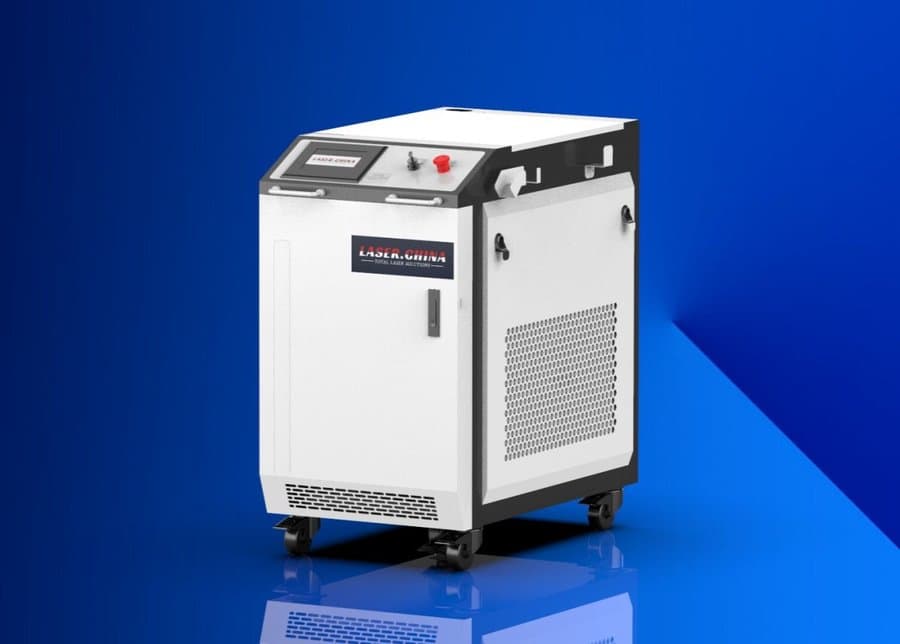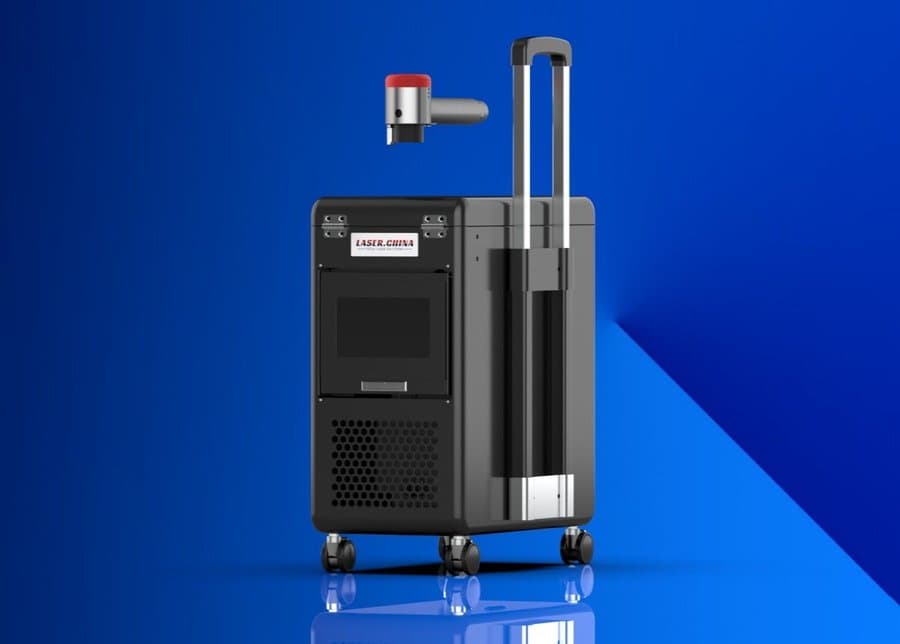
Both types of machine remove rust and paint with light. They do it differently, and that difference decides which one belongs in your shop. This guide gives you a way to choose without reading a datasheet first.
- Pulsed lasers deliver short bursts, so the base metal has little time to heat up.
- Choose pulsed for thin sheet, precision parts, mould surfaces, and any job where you must keep the primer, plating or anodised layer.
- Continuous wave removes material faster and costs less per watt, but puts more heat into the part.
- Continuous wave fits thick rust and heavy coatings on bridges, tanks and hulls that will be recoated or blasted afterwards.
- If your work mixes both, the answer is usually the one that protects the more valuable surface.
How the two laser types actually differ
Pulsed: energy in short bursts
A pulsed laser releases its energy in very short pulses, each lasting a few billionths of a second, thousands of times per second. Rust, paint and oil absorb the light much more readily than clean metal. The contaminant heats up instantly and breaks away. Each pulse ends before heat can travel into the metal, so the base material stays close to room temperature.
The pulse is also adjustable on a MOPA pulsed fibre source. Our machines offer a pulse width of 2-500 ns and a frequency of 1-4,000 kHz, tuned independently. That control is what makes layer-by-layer, selective cleaning possible.
Continuous wave: steady power
A continuous wave laser delivers a constant beam. Its strength is raw removal rate and a lower price per watt. Its limitation is heat. Because energy arrives without gaps, the substrate warms during cleaning, and thin or heat-sensitive material can discolour, distort or change at the surface.
Choose by the job in front of you
When pulsed is the right choice
- Thin sheet and thin-walled parts that must stay flat.
- Precision components and machined faces where dimensions must hold.
- Mould surfaces where the texture and vent holes must survive.
- Removing a topcoat while keeping the primer, or oxide while keeping the plating.
- Non-metal substrates such as some plastics, glass and composites, where low heat input matters.
- Stone, brick and heritage surfaces, where you cannot afford surface loss.
When continuous wave is the right choice
- Thick rust and heavy coatings on large steel structures such as bridges, tanks and ship hulls.
- Surfaces that will be recoated or blasted anyway, so some heat on the substrate is acceptable.
- Jobs measured in large areas where speed matters more than finish control.
- A tight budget per watt on rough, heavy work.
| Factor | Pulsed | Continuous wave |
|---|---|---|
| Heat into the substrate | Low | Higher |
| Selective, layer-by-layer control | Strong | Limited |
| Removal rate on heavy layers | Slower per watt | Faster |
| Cost per watt | Higher | Lower |
| Thin or precision parts | Suitable | Risky |
| Rough, heavy structural work | Possible, slower | Well suited |
Questions that settle the decision
What must stay when the dirt goes?
List what has to survive: the primer, the plating, the surface texture, the dimensions. If any item on that list is valuable, pulsed is the safer path. If the whole surface will be stripped back and treated afterwards, continuous wave becomes a fair option.
How thick is the layer?
Each pulse lifts a very thin layer. Light films clear in one pass, while thick crusts need several. High single-pulse energy helps break through thick oxide in fewer passes. Our collection covers a maximum single pulse energy of 0.8-15 mJ, and peak power up to 90 kW, depending on the model. If your typical job is a thick crust measured in large areas per shift, price the higher power classes rather than assuming a small pulsed unit will keep pace.
What happens to the surface next?
A pulsed-cleaned surface is dry, free of oil and oxide, and ready to weld or paint, usually in the same shift because bare steel flash-rusts in humid air. Some heavy-duty coating specifications call for a deep profile that only blasting gives. An adhesion test on your own part tells you which case you are in.
Can the part take heat?
Heat tolerance is the question buyers skip. Thin gauge steel, hardened surfaces, plated parts and anything with tight flatness tolerance should be cleaned with the lowest heat input you can get. That points to pulsed.
What this means for your budget
Continuous wave looks cheaper per watt, and for heavy structural work it can be. But the purchase price is only part of cost. If a cheaper machine damages a part, forces a second operation, or cannot do selective work, you pay for it elsewhere. Our price and ROI guide shows how to compare machines on cost per square metre, including waste disposal and clean-down that never appear on a comparison sheet.
All machines in our range use a MOPA pulsed fibre source rated for 100,000 working hours. Power classes run from 100 W to 2,000 W, so you can scale output within the pulsed family instead of switching technology.
A simple decision path
List what must be protected
Primer, plating, texture, dimensions, flatness.
Estimate layer thickness and area
Light film on small parts points to a lower power class; thick crust across large areas points higher.
Check what comes next
Recoating, welding or blasting after cleaning changes how much heat you can accept.
Test on your own material
Send a sample for a remote test before you commit to either technology.
Next step
Not sure which side of the line your work falls on? Tell us the substrate, the contaminant and the area, and we will recommend a power class and run a sample test. Start with the selection guide or contact us for a recommendation.