Every laser source makes heat, and the cooling system decides how that heat leaves the machine. It looks like a minor line on the datasheet, yet it shapes where you can work, how long you can run and what you maintain.
- Air cooling suits intermittent and mobile work: nothing to fill, drain or protect from freezing.
- Water cooling suits continuous shifts, hot ambient conditions and sustained high power.
- Our suitcase and trolley models are air-cooled and maintenance-free; the 300-2000 W high power model is water-cooled.
- Match cooling to your duty cycle and site conditions, not to a power number alone.
What cooling does
Why heat has to go somewhere
A fibre laser converts electrical energy into light, and a share of that energy turns into heat inside the source and electronics. If the heat is not removed, performance drifts and components age faster. Cooling keeps the source in its working range so that output stays stable over a shift.
Two ways to remove it
Air cooling moves air across heat sinks with fans. Water cooling circulates liquid through the source and a chiller or radiator, which carries away much more heat in a given space. The trade-off is simple: air cooling is lighter and simpler, water cooling handles sustained heat load better.
Air cooling: when it fits
The case for air
- Intermittent work, with pauses between jobs or between passes.
- Mobile and site work, where you carry or roll the machine between locations.
- No water to fill, drain, top up or protect from frost.
- Lighter, more compact formats, which matters when your operator carries the machine up scaffolding or across a plant.
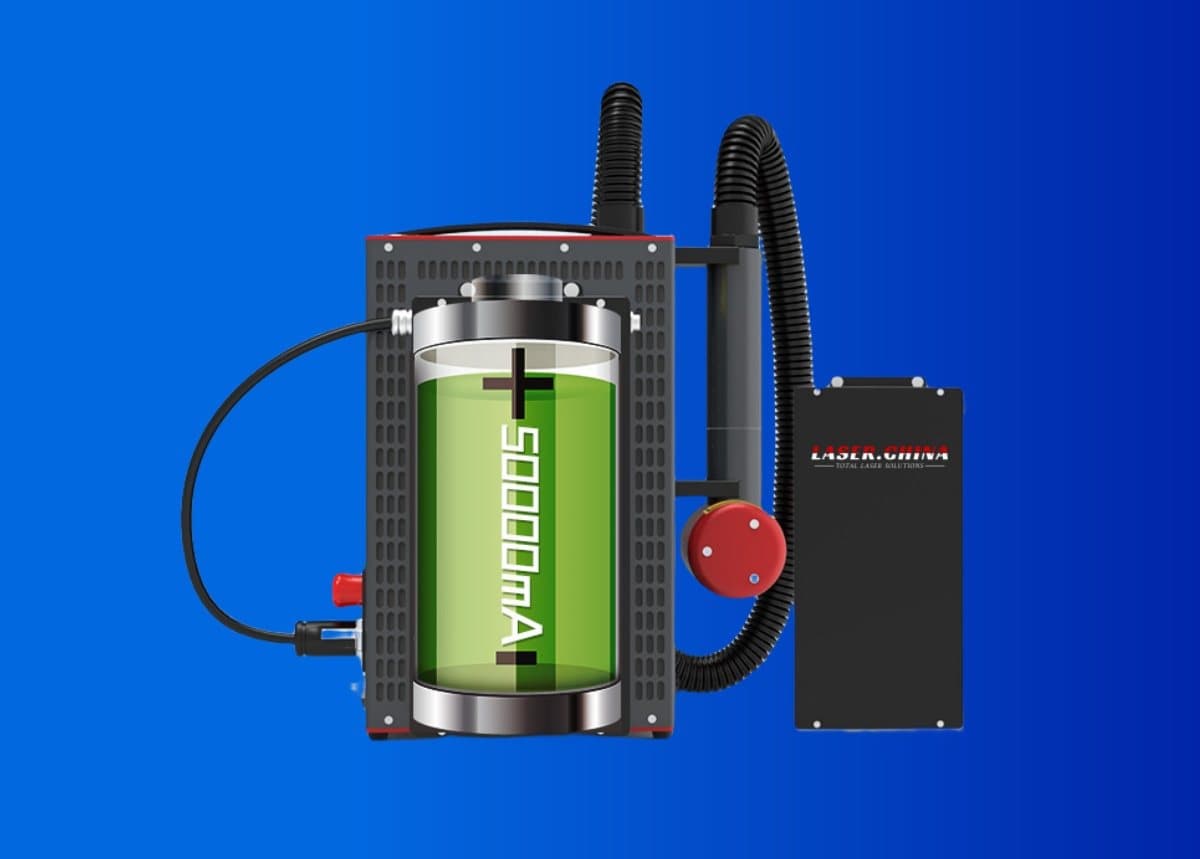
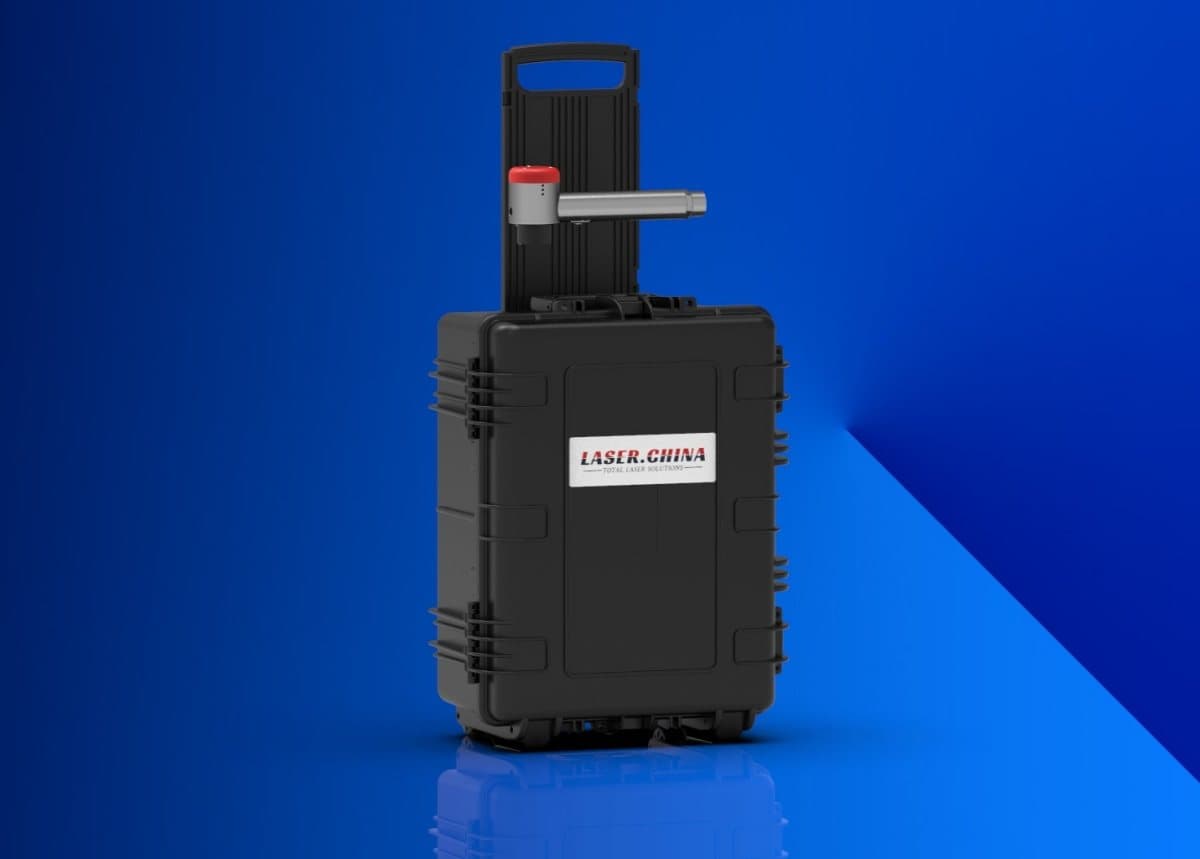
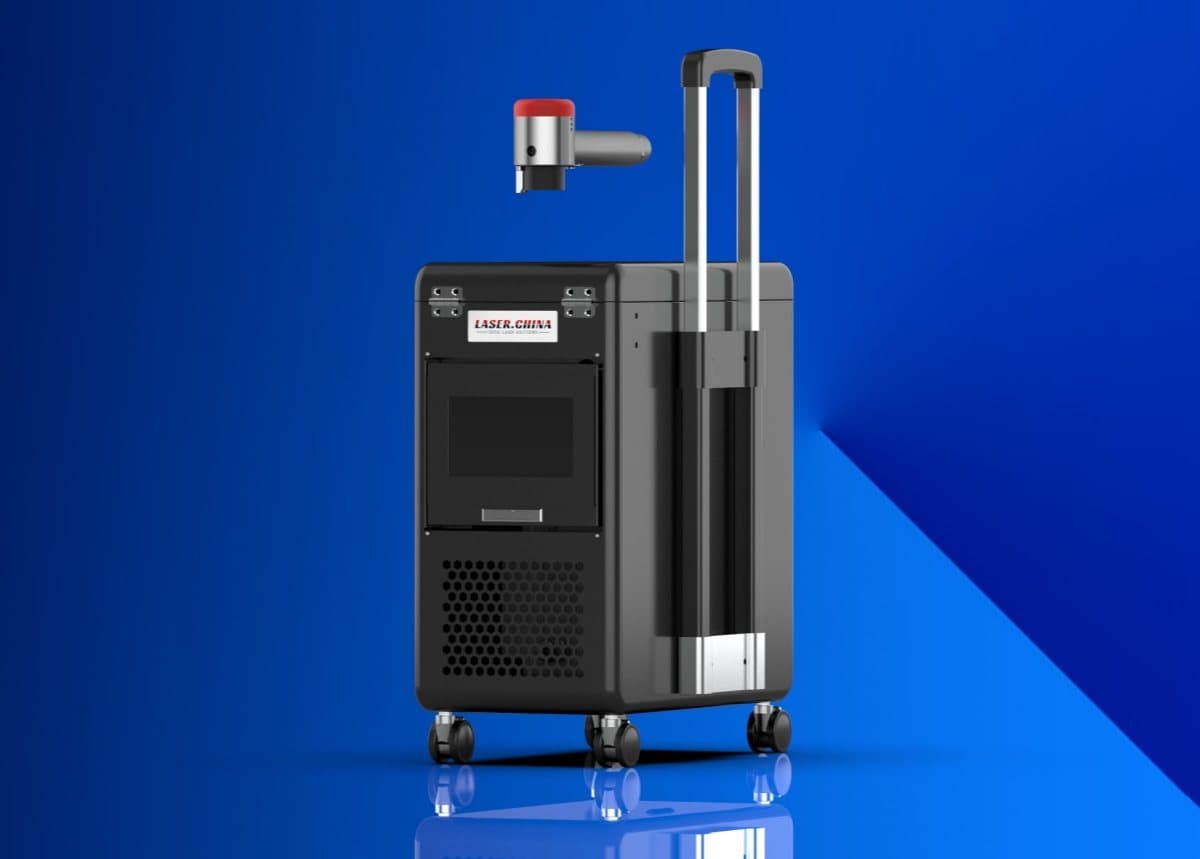
Our 100-500 W suitcase-type and trolley models are air-cooled and maintenance-free, at 33 kg and 36 kg from respectively. For a typical day of mould cleaning, spot repair, weld preparation or heritage work, air cooling is the simplest answer.
The limits of air
In very hot workshops, or when the machine is run flat out for long periods, air cooling has less margin. Check the duty cycle and the working temperature range on the datasheet of the specific model, because exact values vary.
Water cooling: when it fits
The case for water
- Continuous shifts where the machine runs for hours without a break.
- High ambient temperatures, where air alone would struggle.
- Sustained high power, in the 1000 W and 2000 W classes.
- Production lines where uptime matters more than portability.
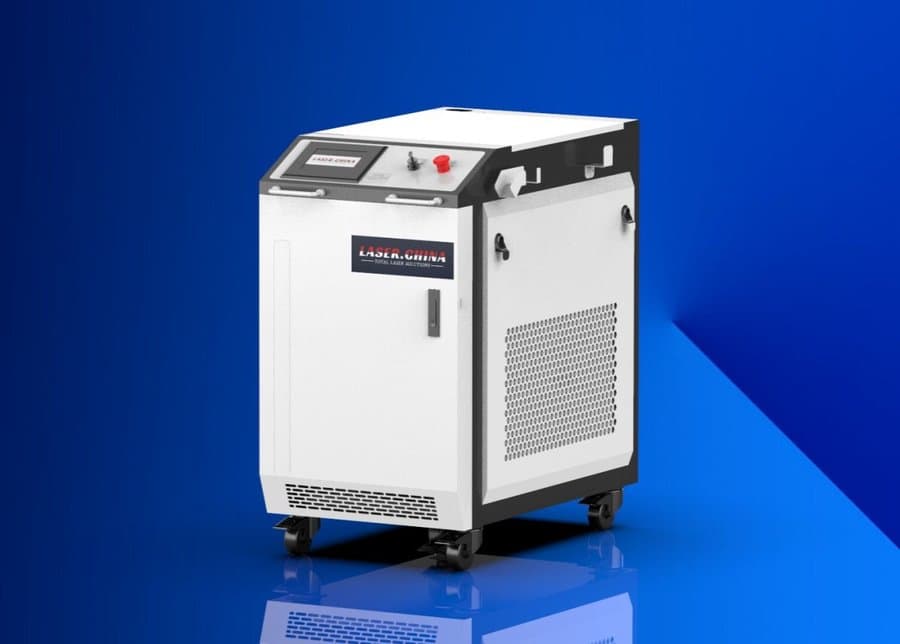
Our 300-2000 W high power model is water-cooled and rated for 24-hour non-stop work from -20 degrees C to 50 degrees C ambient. It also includes voltage safeguard and lens air-knife protection, and keeps full mobility from 300 W to 2,000 W.
The cost of water
Water brings routine tasks: checking the coolant level, keeping the coolant clean, and thinking about frost if the machine is stored or used in cold sites. These are small jobs, but they must be done. Put them in the daily and periodic routine, and see our maintenance guide.
| Question | Air cooling | Water cooling |
|---|---|---|
| Duty cycle | Intermittent | Continuous |
| Hot ambient conditions | Check margin | Better suited |
| Mobility and weight | Lighter, simpler | Heavier cabinet |
| Routine upkeep | Minimal | Coolant checks |
| Frost risk | None from coolant | Needs attention |
| Typical power | Lower to mid classes | High power classes |
Choosing for your situation
Start from the duty cycle
Count how many hours per shift the beam is actually on. A mould shop that cleans for twenty minutes between runs is a very different case from a line that cleans parts all shift.
Then check the site
Think about the hottest day, the dustiest corner and the coldest night. A machine that is stored in an unheated van needs a different plan from one in a climate-controlled workshop.
Then think about movement
If the machine goes to the part, weight matters, and air cooling usually gives the lighter format. If the part comes to the machine, a water-cooled cabinet is no obstacle.
Common pairings
Service technician across sites
Air-cooled carry case or suitcase.
In-plant moves between workstations
Air-cooled trolley.
Production line, full shifts
Water-cooled high power machine.
A note on environment
Whatever the cooling type, keep the intake and exhaust clear of dust, and keep the protective lens clean. A well-cooled source in a dirty cabinet will not give you a steady result. Cooling is also not a substitute for safe operation: always follow the laser safety checklist, including eyewear rated for 1064 nm, and test on an offcut.
Questions to put to a supplier
Cooling-specific checks
- What ambient temperature range is the model rated for?
- Is the model rated for continuous operation, and for how long?
- What routine tasks does the cooling system need, and how often?
- Where are the air intake and exhaust, and can they be blocked in normal use?
- For water cooling, what coolant is used and how is frost handled?
Get the answers in the datasheet or in writing, because values vary by model. A remote sample test also shows how the machine behaves on your material, though a long shift in your own workshop is the real test of cooling.
Next step
Tell us your duty cycle, site temperature and how far the machine has to travel, and we will recommend a cooling type with the model. Use the selection guide or see the product range for the air-cooled and water-cooled models.