Two machines with the same laser can feel completely different at work. One goes up scaffolding on an operator's back. The other rolls between stations on a factory floor. Format is a buying decision, not a styling choice.
- Start with where the work happens. If parts can be brought to the machine, choose on power and price.
- If the machine goes to the part, plan how you will move it.
- Backpack suits scaffolding and tight access; carry case suits service-van jobs across several sites; trolley suits rolling between workstations in one plant.
- Weight and cooling usually rise together with format and power.
Start with the working radius
Does the part come to the machine?
If you can bring parts to a fixed bench, the form factor matters little. Choose on power, cooling and price. Many buyers in this position are better served by a trolley or suitcase unit that stays in one bay.
Or does the machine go to the part?
If the mould stays in the press, the structure stays where it is installed, or the job is at a customer's site, the machine has to travel. That is where format starts to decide productivity. Your operator walks to the work instead of waiting for a crane.
The four formats compared
| Format | Best for | Weight | Power range |
|---|---|---|---|
| Backpack | Scaffolding, tight access, single operator | From 14 kg | 100-300 W |
| Carry case | Service van, several sites | From 15 kg | 100-500 W |
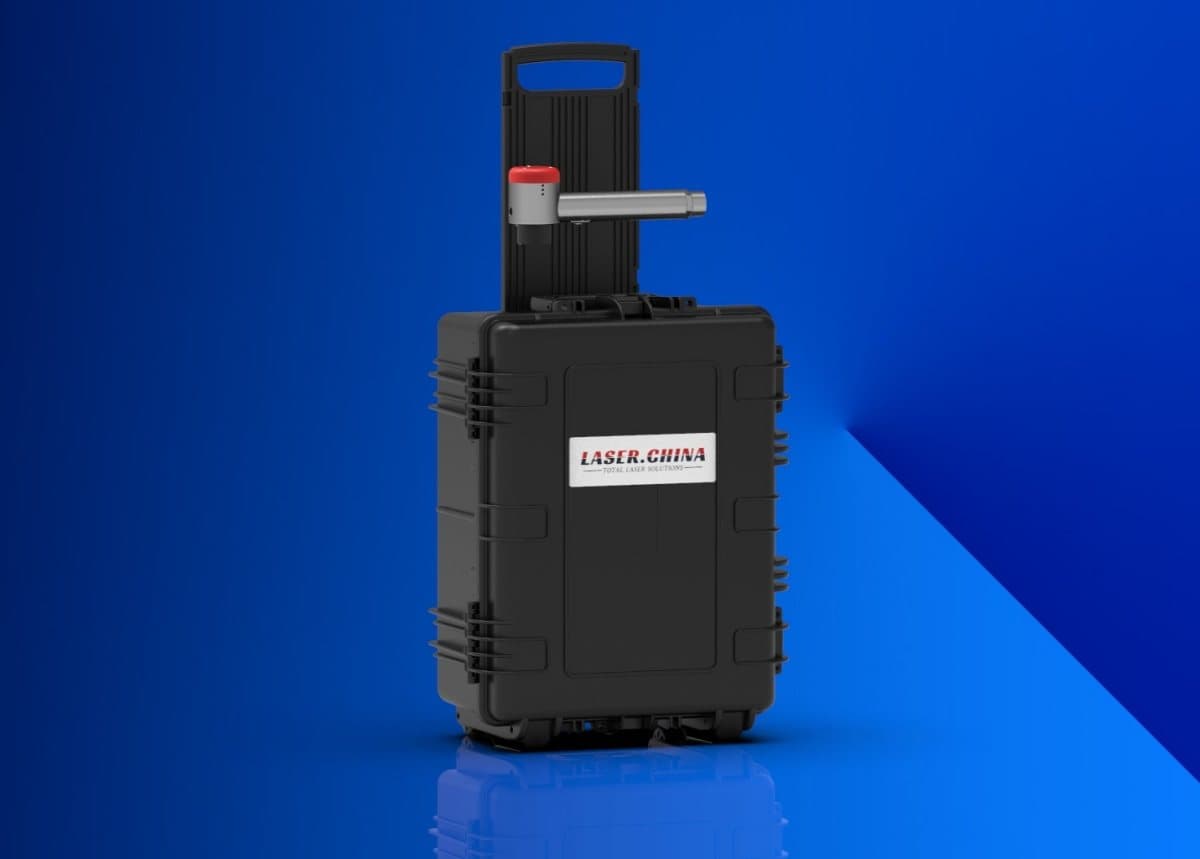
| Suitcase | Travel, flights, flexible site work | From 33 kg | 100-500 W |
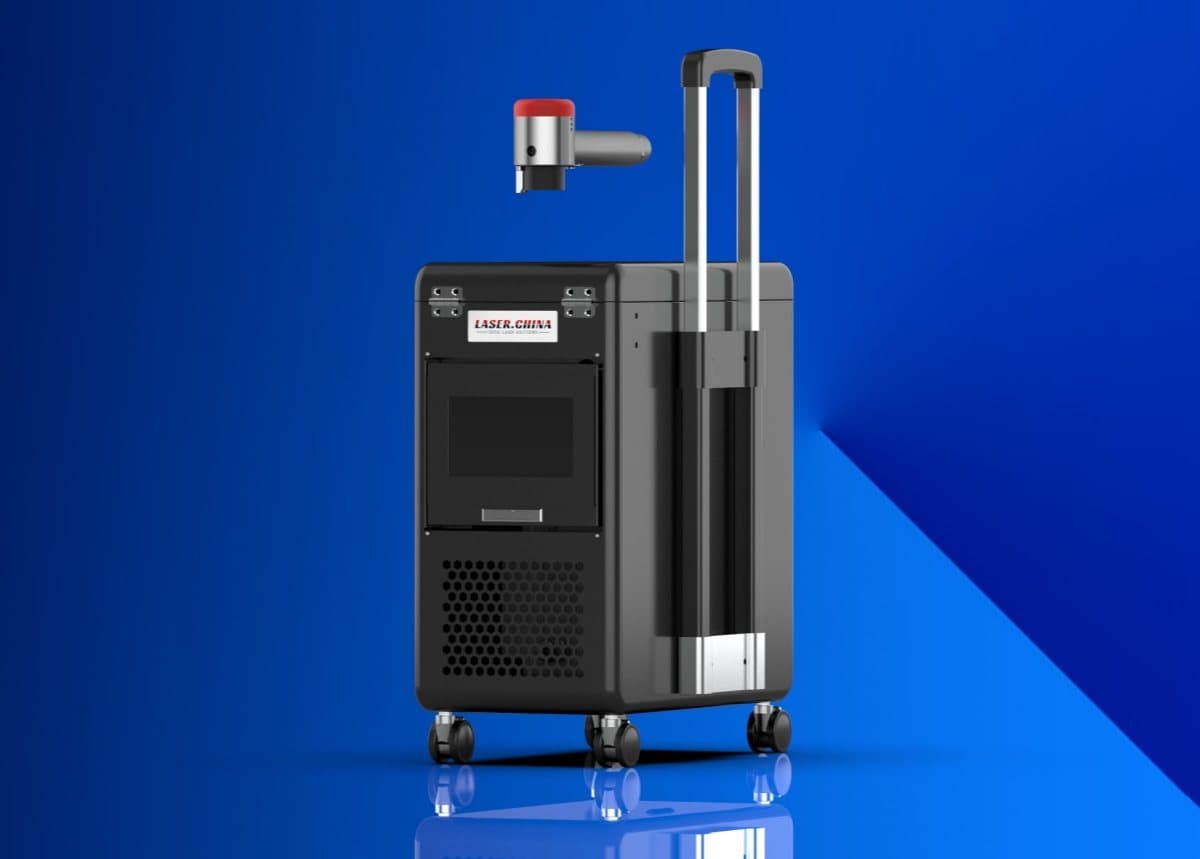
| Trolley | In-plant moves between stations | From 36 kg | 100-500 W |
Weights are the starting points in our product range and vary by model.
Backpack: for access
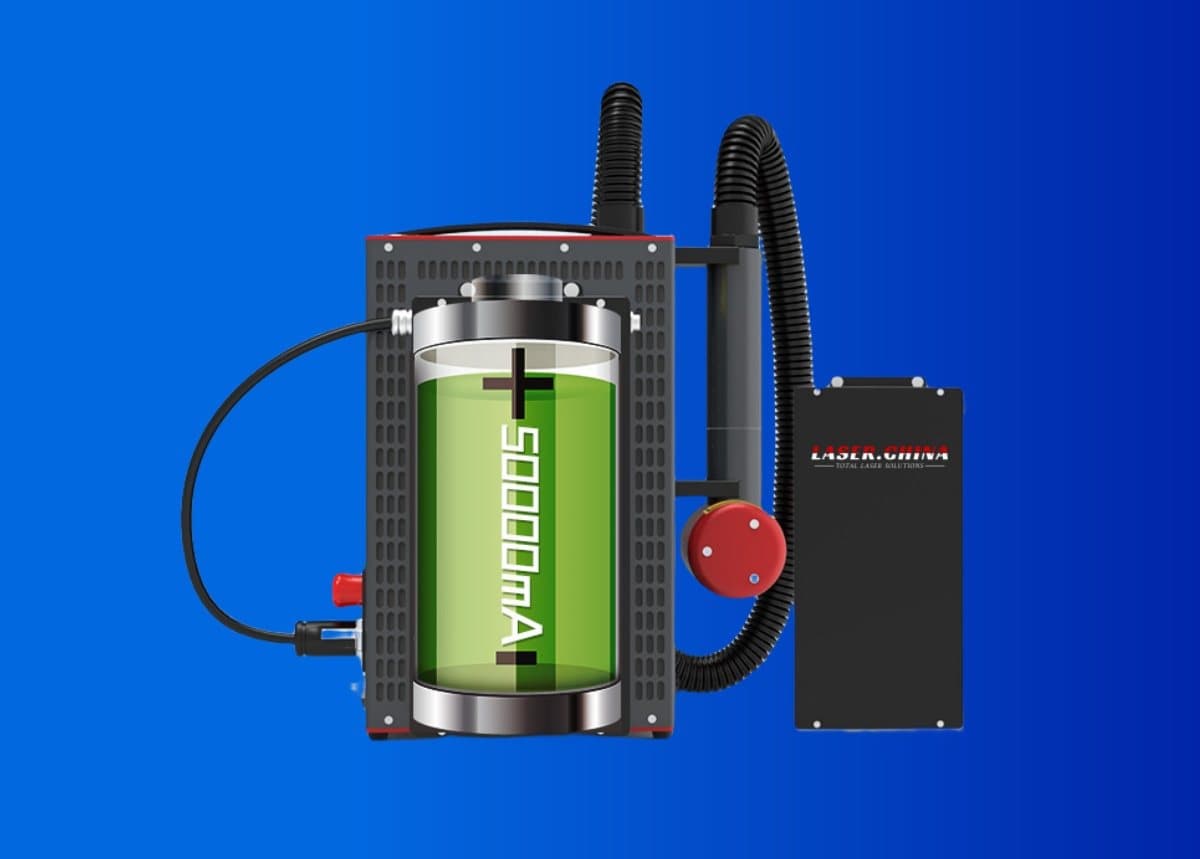
The backpack format keeps both hands free and weighs from 14 kg. It is the right choice for scaffolding, stairs, ladders, roofs, crawl spaces and any place a wheeled unit cannot go. The trade-off is operator fatigue: a day with a loaded back is different from a day with a cart. The 100-300 W 6-in-1 handheld machine comes in backpack and luggage formats, from $8,900.
Carry case: for travelling technicians
A carry case from 15 kg fits in a van, goes through doorways and can be set down next to the work. It suits service teams that visit several sites in a week. The 100-500 W portable handheld model has a carry-case design with a 6-in-1 multi-function laser.
Suitcase: for flexibility and transport
The suitcase format, from 33 kg, rolls on wheels and has a handle, so it travels well in vehicles and through buildings. Our 100-500 W suitcase-type model is air-cooled and maintenance-free, with a pulse width of 2-500 ns and a frequency of 1-4,000 kHz.
Trolley: for the plant floor
The trolley format, from 36 kg, is a cart that moves between workstations inside one plant. Our 100-500 W trolley model is air-cooled and maintenance-free, with air purification and lens air-knife protection. It suits an operator who cleans moulds in one bay and weld joints in the next.
Questions that decide the format
How will it travel?
A machine that fits a van, a train, or an airline's checked baggage opens up different service models. Check the weight and dimensions on the datasheet against your actual transport.
How hard is the access?
Stairs, ladders and narrow gaps rule out wheels. Open floors and ramps do not.
Who carries it, and for how long?
An honest answer here prevents injury and idle machines. If the same person lifts the unit several times a day, choose the lightest practical option, even if it means a lower power class.
What power do you need?
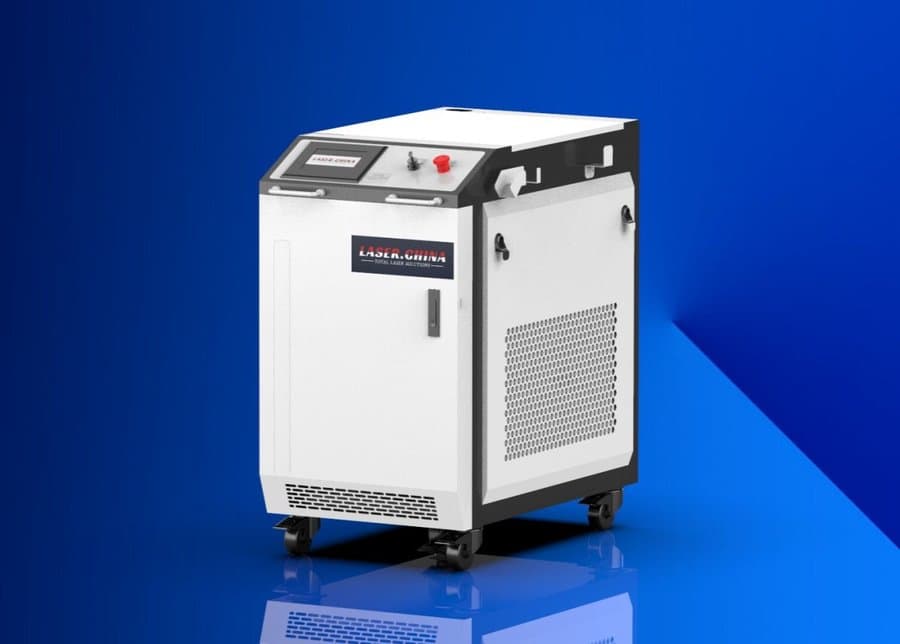
Format and power are linked. For the heaviest work, the 300-2000 W high power machine is a water-cooled cabinet, built for production rather than carrying. See our power guide for sizing.
Do not forget the accessories
Format is more than the laser box. Think about where fume extraction, the cable and the handheld head will sit. A compact machine used with an oversized extractor loses much of its portability. Plan the whole kit, including eyewear and signage, as one package.
A short selection path
Map the work locations
List where cleaning happens and how the machine will get there.
Check access constraints
Stairs, ladders, gaps and uneven ground.
Pick the lightest format that meets your power need
Weight is a daily cost for the operator.
Confirm with a sample test
Check the result on your own material before ordering.
Where each format tends to land in real work
Typical scenarios
- Mould and tooling shops: a trolley or carry case cleans the mould in the press between runs, so you avoid pulling it and losing half a day.
- Maintenance teams on structures: a backpack unit goes up scaffolding to clean welds and spot-repair coatings in place.
- Heritage and restoration crews: a lower-power portable machine gives finer control and goes to the wall or the door.
- Service companies: a carry case or suitcase unit fits in the van and serves several customers in a week.
These are patterns, not rules. If you are unsure, tell us the three jobs you do most and we will point to the format that serves them best.
Next step
Tell us how and where the machine will be used, and we will suggest the format and model. See the full product range or start with the selection guide.